Healthcare
What Is POS 02 in Medical Billing - Complete Telehealth Guide
Learn what POS 02 means in medical billing, when to use it for telehealth, how it differs from POS 10, and com...

Sep 18, 2026
1 min read

Jordan Taylor
August 6, 2026
Table of Contents
8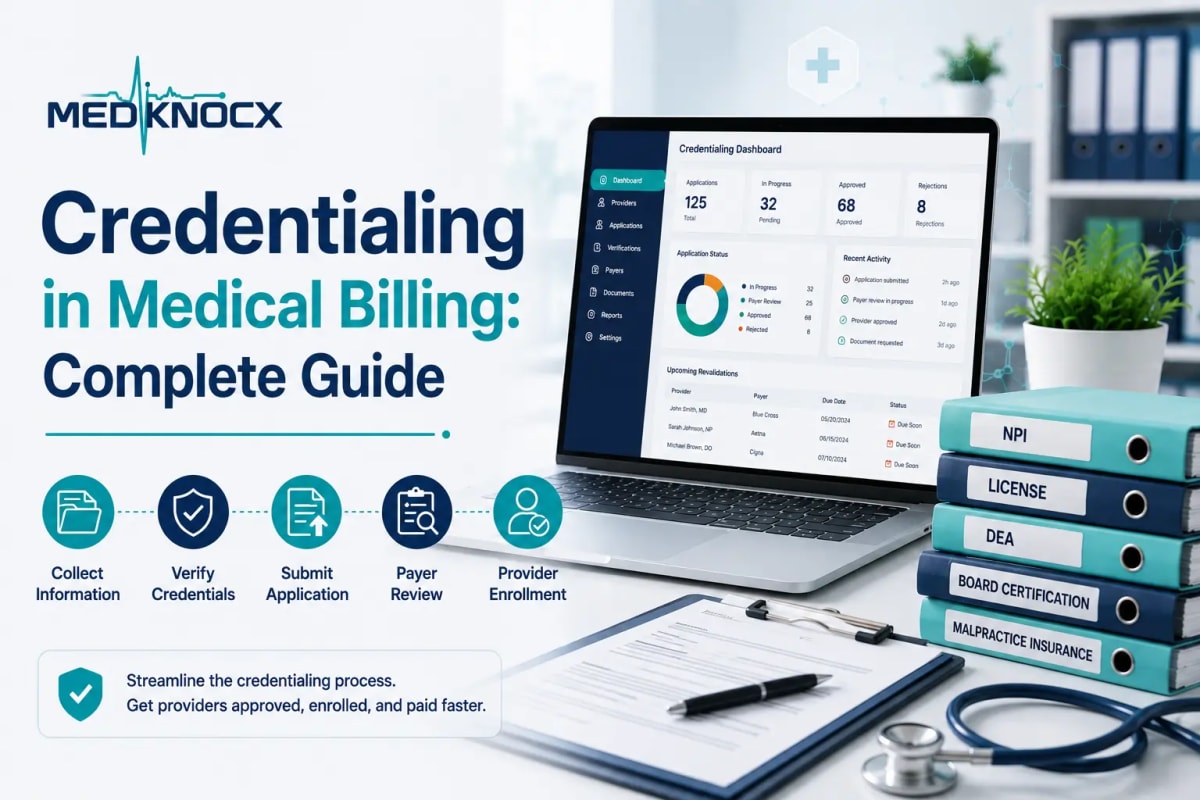
Claims don't get paid simply because the coding is accurate. Insurance companies first need to recognize the provider as an approved participant in their network. If that approval hasn't happened, reimbursement may be delayed or denied, even when every claim is submitted correctly.
That's why credentialing in medical billing plays such an important role. It allows healthcare providers to participate in insurance networks, submit claims, and receive payment for covered services. Without completed credentialing, a practice may lose revenue, experience payment delays, and spend more time resolving preventable billing issues.
Many providers also confuse insurance credentialing, provider enrollment, and insurance enrollment. These terms are related, but they don't mean the same thing. Knowing how each process works helps practices avoid costly mistakes and keep the revenue cycle moving.
This guide explains what credentialing is, why it matters, how the process works, the different types of credentialing, common challenges, and how professional credentialing services can help healthcare practices.
Insurance companies don't approve every provider automatically. They first verify the provider's qualifications before allowing that provider to join their network. This review is known as credentialing in medical billing.
During the review, insurance payers confirm that a provider meets their professional and legal requirements. They check the provider's medical license, education, training, board certification, National Provider Identifier (NPI), DEA registration when applicable, malpractice insurance, and work history. Many payers also use CAQH ProView to collect and verify provider information before making a decision.
Credentialing is only one part of the approval process. After the provider's credentials are approved, the payer usually completes provider enrollment so the practice can submit claims and receive reimbursement. Both steps are necessary before most insurance companies process claims under the provider's name.
A missing document, expired license, or inaccurate application can delay approval for weeks or months. Those delays often lead to slower reimbursements and unnecessary administrative work.
A provider may have years of experience and every required qualification, but insurance companies still won't reimburse covered services until credentialing is complete. That's why this process affects both patient access and practice revenue.
Many insurance plans only pay providers who participate in their network. When credentialing is delayed, patients may have fewer in-network options, and practices may wait much longer to receive payment. In some cases, claims are denied because the provider wasn't credentialed on the date of service.
Credentialing also protects patients. Insurance companies verify licenses, certifications, education, and professional history before approving network participation. This review helps maintain quality standards while reducing the risk of fraud and inaccurate provider information.
For healthcare organizations, proper credentialing supports a revenue cycle management, reduces reimbursement delays, improves compliance, and helps practices maintain strong relationships with insurance payers.
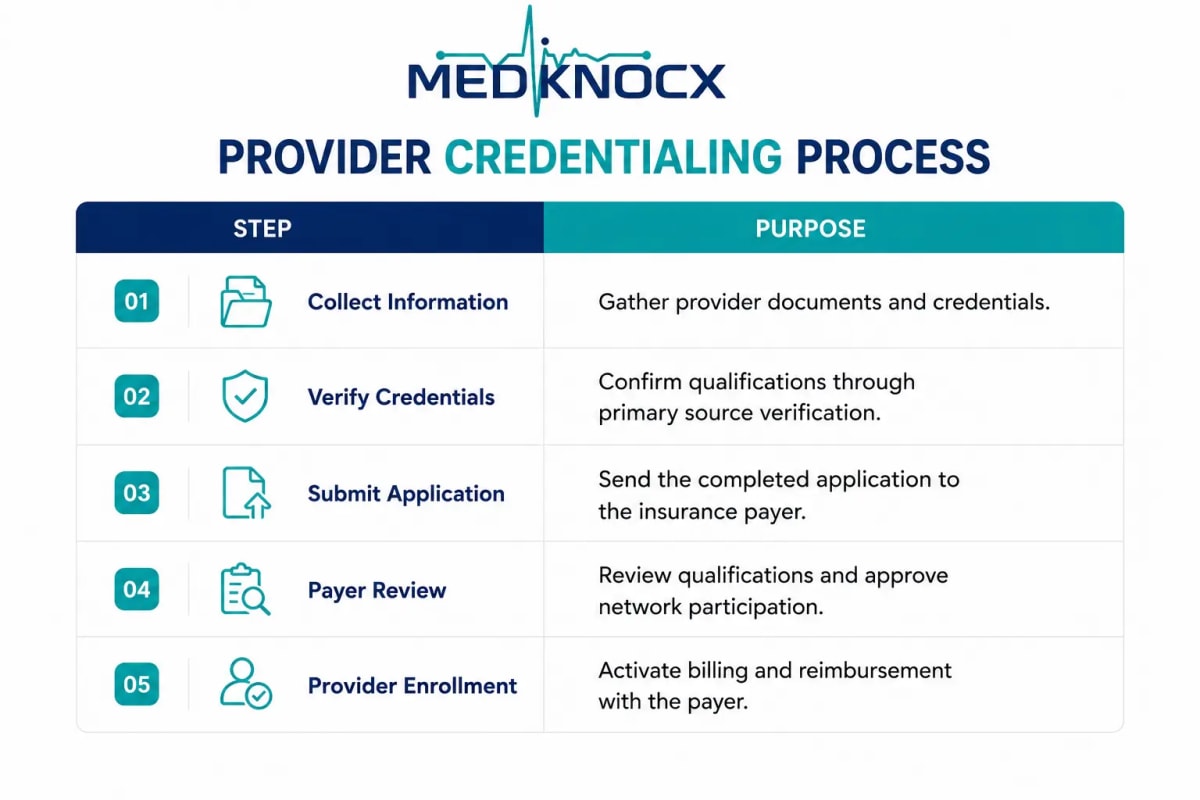
Most insurance companies follow a similar process, although individual requirements may vary. Every application starts with accurate provider information and ends when the insurance payer approves the provider for network participation.
The practice gathers all required documents before submitting an application. Most payers request a medical license, NPI, board certification, DEA registration, malpractice insurance, education records, work history, and other supporting documents.
The insurance payer reviews the provider's information through primary source verification. This step confirms that licenses, certifications, and other credentials remain valid. Many organizations also review provider information through CAQH ProView.
After verifying the required information, the practice submits the credentialing application along with the supporting documents. Some insurance companies accept electronic applications, while others require additional forms.
The insurance company reviews the application and may request additional information before making a final decision. Missing or outdated documents usually extend the review process.
After credentialing approval, the provider completes enrollment with the insurance company. This step allows the practice to submit claims and receive reimbursement for covered services.
Credentialing requirements vary by provider, healthcare organization, and insurance payer. The purpose stays the same, but the documents, review process, and approval requirements may differ.
This is the most common type of medical credentialing. Insurance companies verify a provider's education, licenses, certifications, work history, and professional background before adding the provider to their network. Physicians, nurse practitioners, physician assistants, therapists, and other healthcare professionals all complete this process.
Physician credentialing focuses on doctors who want to participate in insurance networks or practice at hospitals. Insurance companies review residency training, board certification, malpractice history, state licenses, and other professional records before granting approval.
Hospitals perform their own credentialing before granting clinical privileges. This review confirms that a physician or specialist has the qualifications and experience required to treat patients within the facility.
Insurance credentialing allows providers to join commercial insurance networks, Medicare, Medicaid, and other payer programs. Once approved and enrolled, the provider can submit claims for covered services.
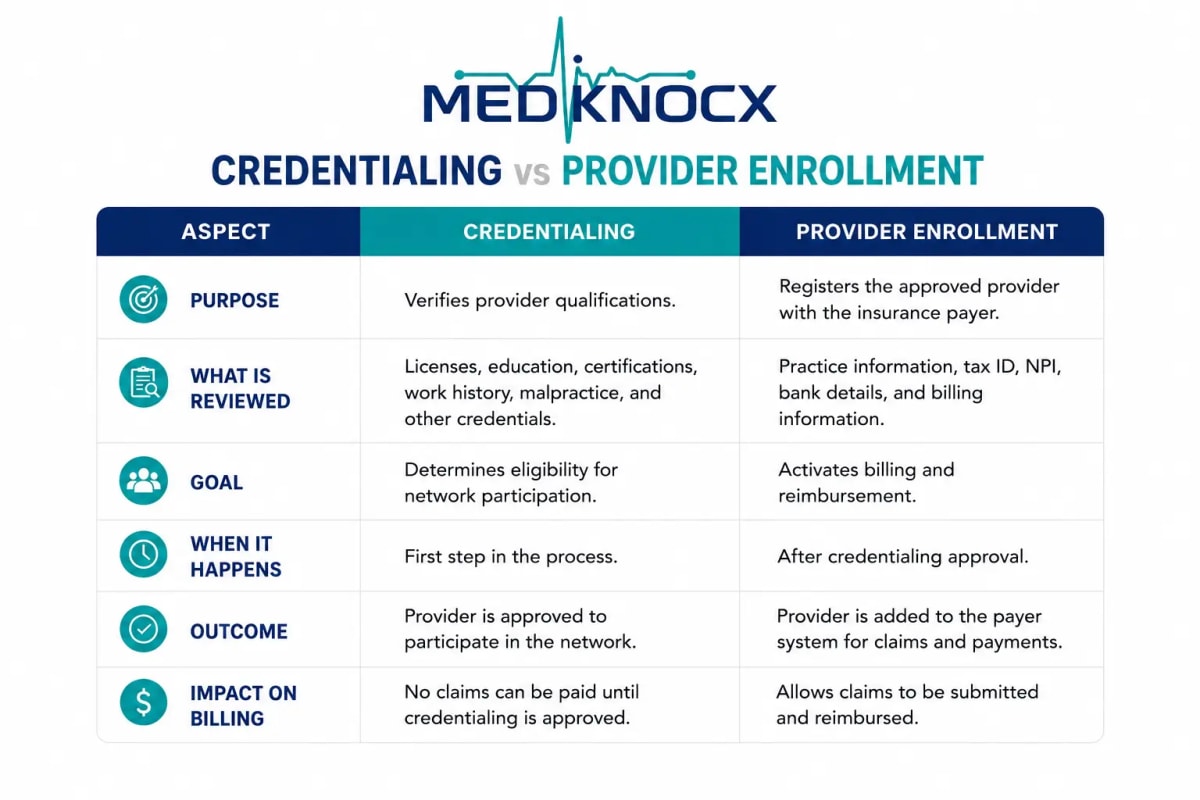
Many people use these terms interchangeably, but they describe two different steps.
Credentialing confirms that a provider meets the insurance company's professional requirements. The payer reviews licenses, certifications, education, work history, malpractice coverage, and other credentials before deciding whether the provider qualifies for network participation.
Provider enrollment begins after credentialing approval. During this step, the insurance company adds the provider to its billing system, links the provider to the practice, and activates reimbursement for covered services.
Both steps matter. Completing credentialing without provider enrollment may still prevent a practice from receiving payment. Completing enrollment before credentialing approval usually results in delays because the payer hasn't finished reviewing the provider's qualifications.
Most credentialing delays happen because of paperwork, missing information, or slow communication with insurance companies. Small mistakes often create weeks of unnecessary delays.
Insurance companies review every application carefully. Missing signatures, incomplete work history, or incorrect provider information usually stop the review until the missing details are corrected.
An expired medical license, DEA registration, malpractice insurance policy, or board certification may delay approval. Practices should review every document before submitting an application.
Many insurance companies rely on CAQH ProView during credential verification. If the provider's profile contains outdated information or hasn't been updated, the payer may request corrections before continuing the review.
Each insurance company follows its own review schedule. Some applications move quickly, while others require additional verification and take much longer to approve.
Credentialing doesn't end after submitting an application. Practices still need to respond to payer requests, update provider records, monitor application status, and complete provider enrollment. As the number of providers and insurance companies grows, managing everything in-house becomes more difficult.
Professional medical billing and credentialing services help practices keep the process organized. A credentialing team prepares applications, verifies provider information, follows up with insurance companies, and tracks approvals until the provider joins the payer's network.
A structured process also reduces common credentialing problems. Accurate applications, updated CAQH profiles, complete documentation, and timely follow-ups help practices avoid unnecessary delays and improve reimbursement.
Benefits at a Glance
Credentialing is one of the first steps in the medical billing process. Without it, providers may struggle to join insurance networks, submit claims, or receive timely reimbursement. A complete and accurate credentialing process helps practices reduce delays, maintain compliance, and build a stronger revenue cycle.
Whether you're opening a new practice, adding providers, or expanding into additional insurance networks, keeping provider credentials current helps prevent billing interruptions and unnecessary claim delays.
If your practice needs support with medical billing credentialing, provider enrollment, or payer communication, Mediknocx helps healthcare organizations complete the credentialing process accurately, reduce approval delays, and improve reimbursement with end-to-end credentialing services.
Credentialing in medical billing is the process insurance companies use to verify a healthcare provider's qualifications before approving that provider to participate in their network and receive reimbursement for covered services.
No. Credentialing verifies a provider's qualifications. Provider enrollment registers the approved provider with the insurance payer so claims can be submitted and reimbursed.
Most insurance companies request: Medical license National Provider Identifier (NPI) Board certification DEA registration (when required) Malpractice insurance Work history Education records CAQH profile Requirements may vary by payer.
The timeline depends on the insurance company. Some applications are approved within a few weeks, while others may take several months if additional verification or documentation is required.
The most common reasons include: Missing documents Expired licenses or certifications Incomplete applications Outdated CAQH information Slow responses from insurance companies
Explore more medical billing guides, coding updates, and revenue cycle tips.
Learn what POS 02 means in medical billing, when to use it for telehealth, how it differs from POS 10, and com...
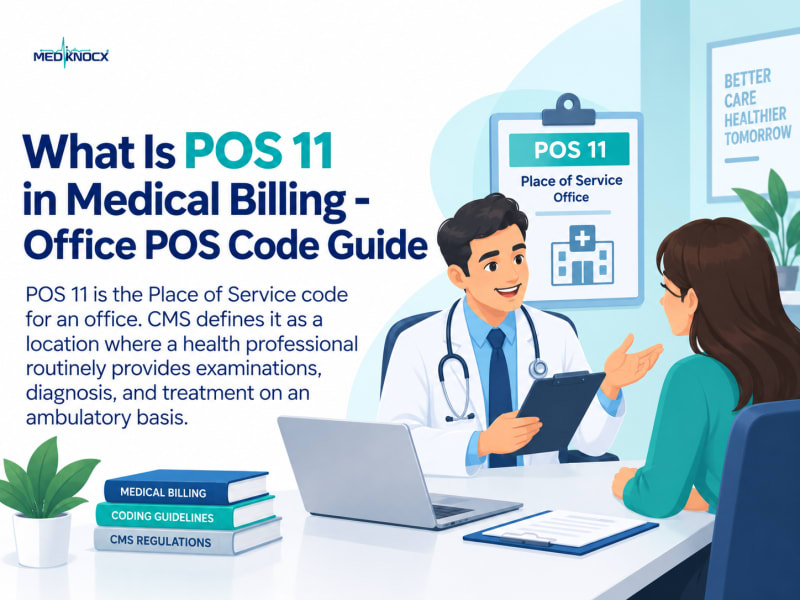
Learn what POS 11 means in medical billing, when to use the office POS code, how it affects claims, and common...

Learn what POS 12 means in medical billing, when to use it, home visit CPT codes, POS 10 vs 12, documentation ...