Healthcare
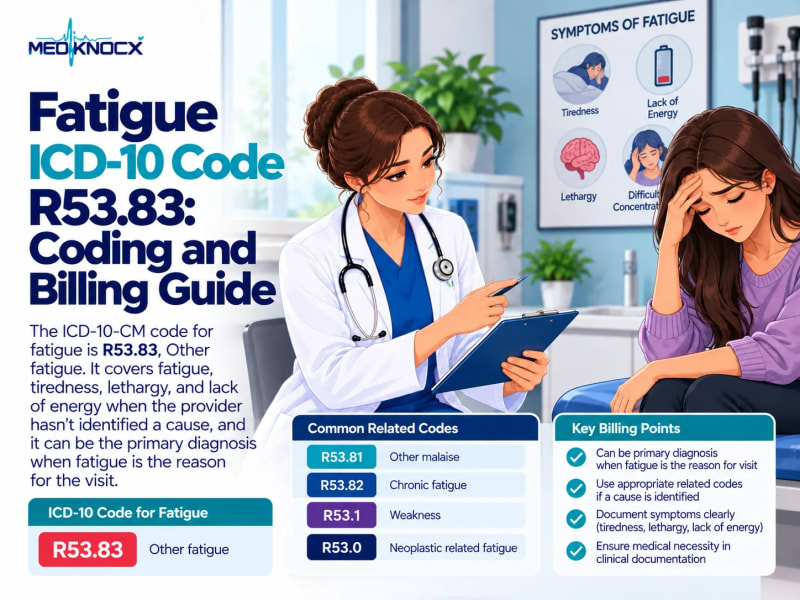
Fatigue ICD-10 Code R53.83: Coding and Billing Guide
R53.83 is the ICD-10 code for fatigue, tiredness, lethargy, and lack of energy. Learn R53.81 malaise, R53.82 c...

Oct 3, 2026
1 min read

Jordan Taylor
June 5, 2026
Table of Contents
8Learn what Chronic Care Management (CCM) is, how it works, eligibility requirements, benefits, technology, and its impact on patient outcomes.

Managing chronic illnesses can be challenging for both patients and healthcare providers. Conditions such as diabetes, hypertension, heart disease, arthritis, and chronic obstructive pulmonary disease (COPD) require ongoing monitoring, treatment adjustments, and coordinated care. This is where Chronic Care Management (CCM) plays a critical role.
Chronic Care Management is a healthcare service designed to improve the quality of life for individuals living with multiple chronic conditions. Through continuous monitoring, personalized care planning, and enhanced communication between healthcare professionals and patients, CCM helps reduce hospitalizations, improve health outcomes, and support long-term wellness.
In this guide, we'll explore how Chronic Care Management works, who qualifies for it, its benefits, challenges, and the future of chronic disease management in modern healthcare.
Chronic Care Management (CCM) is a Medicare-supported healthcare program that provides non-face-to-face care coordination services for patients with two or more chronic conditions expected to last at least 12 months or until the end of life.
The goal of CCM is to ensure patients receive consistent, coordinated care between office visits. Healthcare providers develop comprehensive care plans, monitor patient progress, manage medications, and coordinate with specialists to reduce health risks and improve overall outcomes.
Examples of qualifying chronic conditions include:
Diabetes
Hypertension
Heart disease
Asthma
COPD
Arthritis
Chronic kidney disease
Depression
Alzheimer's disease
CCM creates a structured approach to managing complex healthcare needs while empowering patients to take a more active role in their health
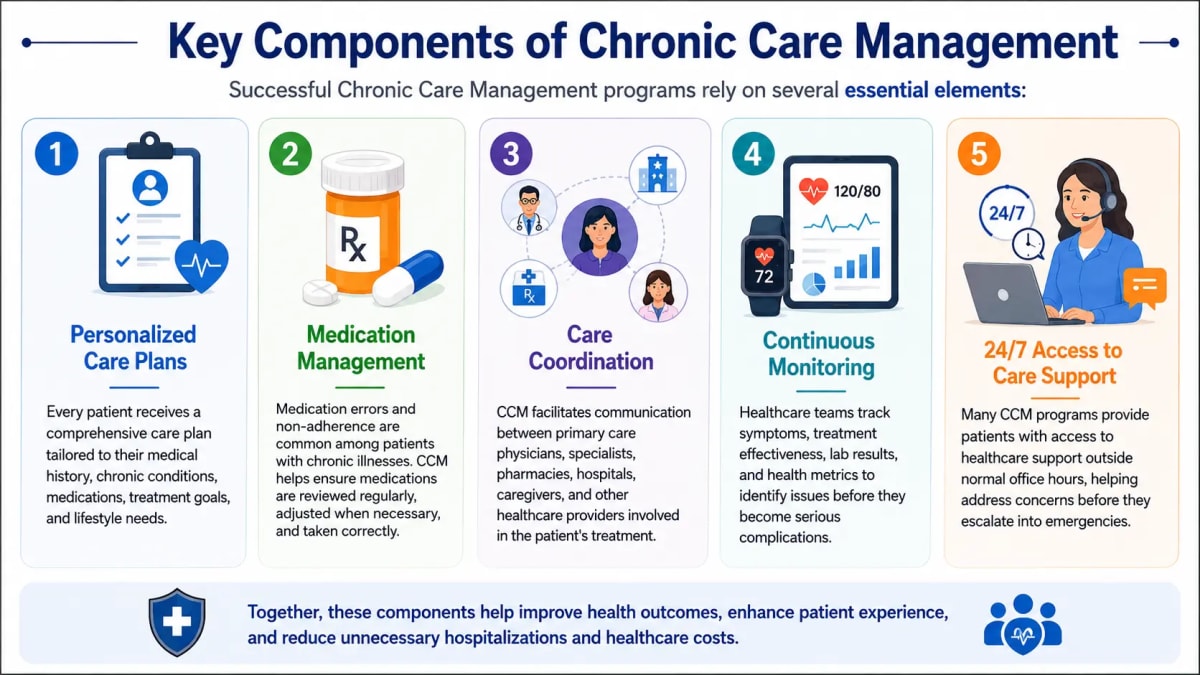
Successful Chronic Care Management programs rely on several essential elements:
Every patient receives a comprehensive care plan tailored to their medical history, chronic conditions, medications, treatment goals, and lifestyle needs.
Medication errors and non-adherence are common among patients with chronic illnesses. CCM helps ensure medications are reviewed regularly, adjusted when necessary, and taken correctly.
CCM facilitates communication between primary care physicians, specialists, pharmacies, hospitals, caregivers, and other healthcare providers involved in the patient's treatment.
Healthcare teams track symptoms, treatment effectiveness, lab results, and health metrics to identify issues before they become serious complications.
Many CCM programs provide patients with access to healthcare support outside normal office hours, helping address concerns before they escalate into emergencies
Chronic Care Management offers significant advantages for both patients and healthcare providers.
Regular monitoring and proactive interventions help prevent disease progression and reduce complications.
Patients enrolled in CCM programs often experience fewer emergency room visits and hospitalizations because health concerns are identified earlier.
Structured medication reviews help patients understand their prescriptions and follow treatment plans more consistently.
Patients receive ongoing education and support, enabling them to make informed decisions about their health.
By preventing avoidable hospital admissions and complications, CCM can significantly reduce long-term healthcare expenses.
Consistent communication creates trust and improves overall patient satisfaction with care.
Patients may qualify for Chronic Care Management if they:
Have two or more chronic conditions.
Require ongoing medical management.
Have conditions expected to last at least 12 months or for the remainder of their life.
Face a significant risk of hospitalization, functional decline, or worsening health status.
Common examples of eligible patients include individuals managing diabetes and hypertension simultaneously or those dealing with multiple cardiovascular conditions.
Healthcare providers typically assess eligibility and obtain patient consent before enrolling them in a CCM program.
Technology has transformed Chronic Care Management by making care more accessible, efficient, and data-driven.
EHR systems centralize patient information, allowing providers to access medical histories, medications, and care plans quickly.
Connected devices such as blood pressure monitors, glucose meters, and wearable health trackers allow healthcare teams to monitor patient health remotely.
Virtual consultations improve access to care, especially for elderly patients or those living in rural areas.
Secure online portals enable patients to communicate with providers, access medical records, schedule appointments, and review treatment plans.
Advanced analytics help identify high-risk patients and support earlier interventions to prevent complications.
Despite its benefits, healthcare organizations may face several challenges when implementing Chronic Care Management programs.
Managing documentation, billing requirements, and compliance regulations can be time-consuming.
Some patients may struggle with technology adoption, treatment adherence, or regular participation in care programs.
Effective CCM requires trained care coordinators, nurses, and support staff to manage patient interactions.
Healthcare systems often use multiple software platforms, making seamless data sharing difficult.
Providers must understand Medicare and insurance reimbursement guidelines to maintain sustainable CCM programs.
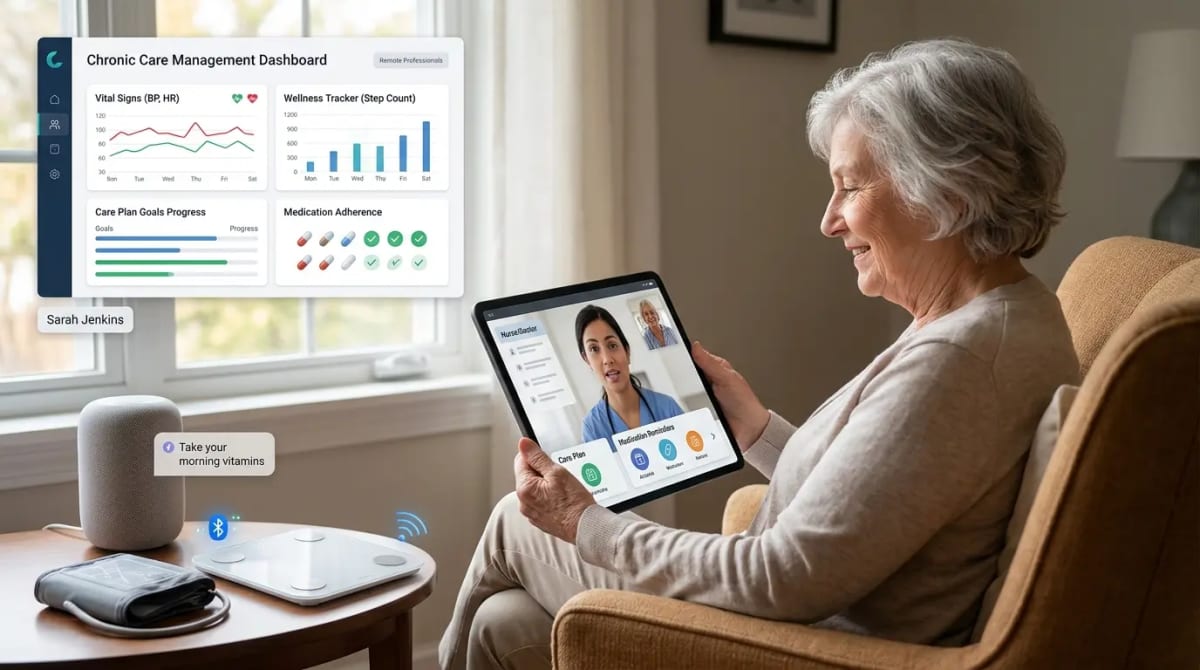
The future of Chronic Care Management is being shaped by technological innovation and value-based healthcare models.
Emerging trends include:
AI-powered risk prediction tools
Expanded remote patient monitoring programs
Greater integration of wearable health devices
Personalized treatment plans based on real-time health data
Increased use of telehealth and virtual care coordination
Improved interoperability between healthcare systems
Chronic Care Management is transforming how healthcare providers support patients living with long-term conditions. By combining personalized care planning, ongoing monitoring, medication management, and coordinated communication, CCM helps improve health outcomes while reducing unnecessary healthcare costs.
For patients managing multiple chronic illnesses, CCM offers a structured and proactive approach to maintaining better health and achieving a higher quality of life. As digital health technologies continue to advance, Chronic Care Management programs will become even more effective, accessible, and patient-focuse
Traditional physician visits focus on addressing health concerns during scheduled appointments. Chronic Care Management extends care beyond office visits through ongoing monitoring, care coordination, medication management, and regular communication between patients and healthcare teams.
Common qualifying conditions include diabetes, hypertension, heart disease, COPD, arthritis, chronic kidney disease, depression, asthma, and Alzheimer's disease. Patients generally need two or more chronic conditions to qualify for CCM services.
Patients often experience improved disease management, fewer hospitalizations, better medication adherence, enhanced communication with healthcare providers, reduced healthcare costs, and greater confidence in managing their health conditions.
Explore more medical billing guides, coding updates, and revenue cycle tips.
R53.83 is the ICD-10 code for fatigue, tiredness, lethargy, and lack of energy. Learn R53.81 malaise, R53.82 c...
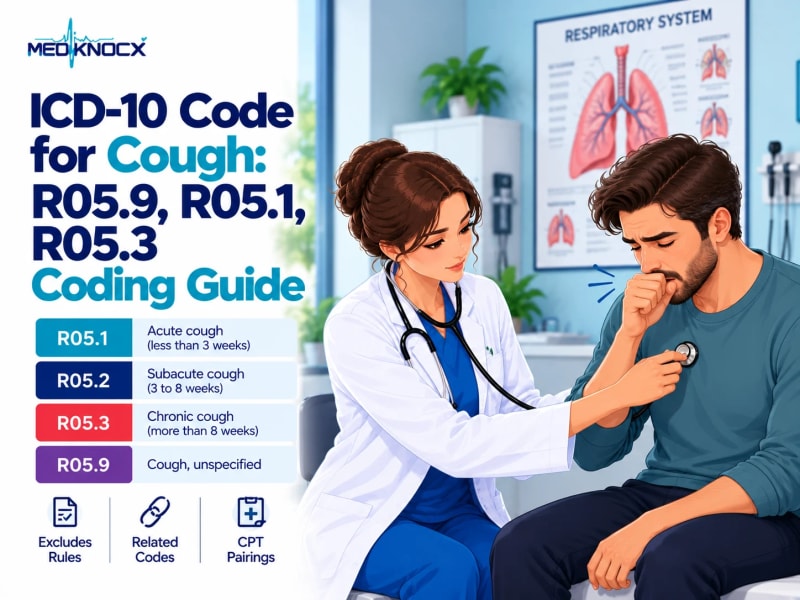
ICD-10 codes for cough by duration: R05.1 acute, R05.2 subacute, R05.3 chronic, R05.9 unspecified. Plus Exclud...
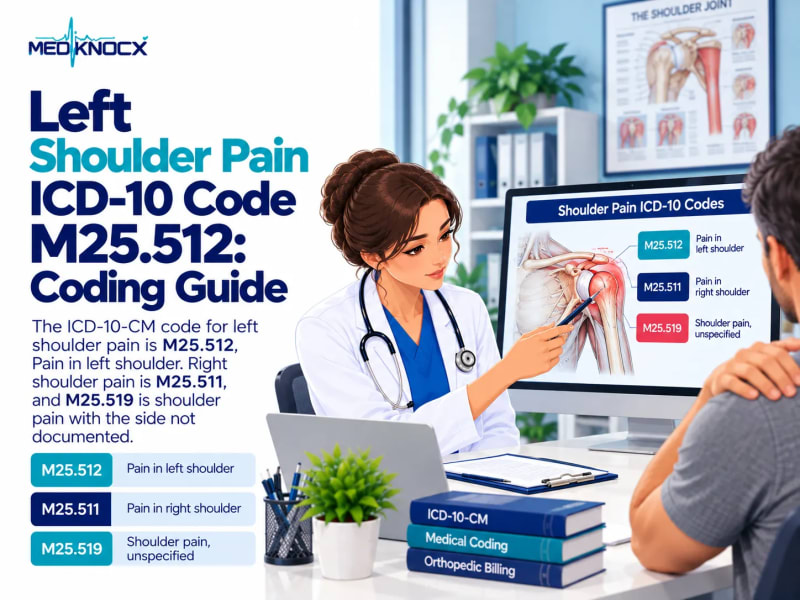
M25.512 is the ICD-10 code for left shoulder pain. See M25.511, M25.519, bilateral coding, scapula and clavicl...