Healthcare
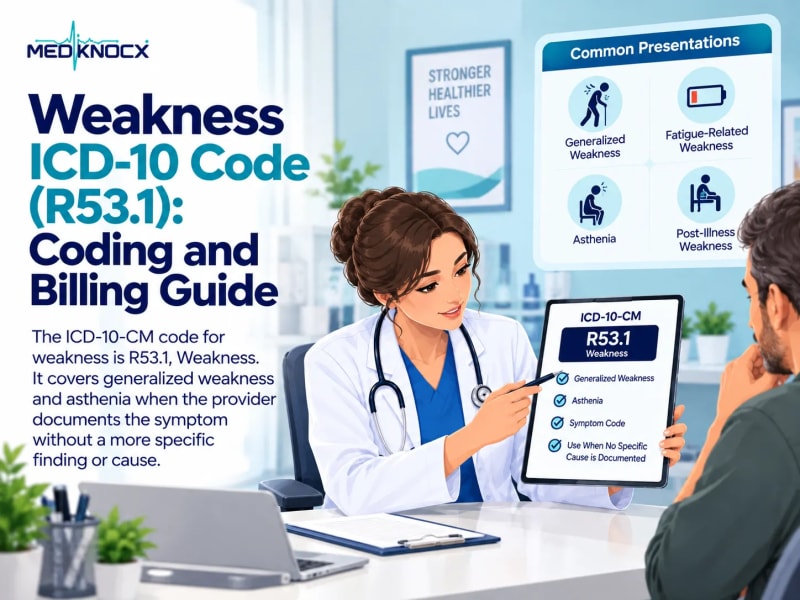
Weakness ICD-10 Code (R53.1): Coding and Billing Guide
R53.1 is the ICD-10 code for weakness. Learn when to use M62.81, R54, R53.81, or R53.83 instead, and why R53.1...

Sep 28, 2026
1 min read

Jordan Taylor
March 3, 2026
Table of Contents
16
Small medical practices face constant pressure: rising administrative costs, staffing shortages, complex payer rules, and increasing compliance demands. Managing billing in-house can quickly overwhelm your team and disrupt cash flow.
Outsourcing medical billing allows you to spend less time on paperwork and more time caring for patients. It reduces denials, accelerates reimbursements, and lowers administrative overhead—helping your practice collect more revenue with less stress.
By letting specialists handle coding, claims submission, payment posting, and denial follow-ups, your staff can focus on patient care and practice growth. This guide explains:
Outsourcing medical billing shifts essential administrative responsibilities to a specialized billing company. Instead of handling revenue cycle management internally, you partner with experts who manage coding, claim submission, denial management, and reimbursement tracking.
This allows your team to focus on delivering high-quality patient care while professionals optimize your revenue cycle.
The medical billing process begins when a patient receives care and ends when your practice receives full reimbursement.
It includes:
Denial management and appeals
After submission, tracking remittance advice (ERAs), posting payments accurately, and addressing underpayments are critical to maintaining healthy cash flow.
Small practices often struggle with missed steps or coding inaccuracies, which lead to delayed payments and increased denials. Outsourced medical billing services use standardized workflows and advanced billing software to reduce errors and speed reimbursements.
You should expect consistent reporting on key metrics such as:
Managing billing internally offers direct control but comes with hi:
For many small practices, these fixed costs strain budgets and reduce profitability.
Medical billing companies specialize in revenue cycle management (RCM). They provide:
Most vendors charge a percentage of collections or a flat monthly fee, converting fixed payroll costs into performance-based expenses.
When evaluating a vendor, consider:
Successful outsourcing depends on seamless integration with your:
Integration methods may include:
Before signing an agreement, confirm that the billing company:
When implemented properly, outsourcing enhances your workflow without disrupting clinical operations.
Outsourcing medical billing reduces administrative strain, strengthens revenue performance, and gives your practice access to specialized expertise.
Outsourcing eliminates time-consuming tasks such as:
Your front-desk and clinical staff can focus on patient interaction rather than paperwork.
You also avoid recruitment, onboarding, and ongoing training costs associated with maintaining an in-house billing team.
Outsourcing often costs less than running a full in-house department. You eliminate expenses related to:
At the same time, experienced billing professionals improve collections by reducing rejections and speeding up reimbursements.
Better revenue performance leads to improved cash flow and greater financial stability.
Outsourced billing teams stay current on:
Their expertise reduces the risk of billing errors, costly audits, and compliance penalties.
You also gain access to analytics and performance metrics that help guide business decisions.
Outsourcing transforms billing from a reactive administrative task into a strategic financial system.
Professional billing teams implement structured processes for:
Advanced software flags missing information and applies payer-specific rules before claims are submitted. This minimizes rework and improves clean claim rates.
Regular A/R reporting allows you to monitor:
This visibility helps prioritize revenue-impacting actions.
Denial management is one of the biggest benefits of outsourcing.
Billing partners:
They also perform root-cause analysis to identify recurring issues—such as coding errors or eligibility gaps—and implement preventive solutions.
Accurate, first-pass claims reduce rejections and accelerate payments.
Outsourced teams follow up on unpaid claims quickly, reducing days in A/R and improving revenue predictability.
Faster reimbursements translate into:
With improved cash flow, your practice can:
Reliable reporting provides clarity for informed growth decisions.
Outsourcing medical billing does more than improve finances—it strengthens patient experience and compliance protection.
When administrative tasks are reduced:
Better workflow efficiency leads to higher patient satisfaction.
Reputable billing companies implement:
Always require:
Outsourcing does not remove your legal responsibility, but it can significantly strengthen your safeguards.
Certified coders and quality checks minimize billing errors and claim denials.
Experienced vendors stay updated on regulatory changes, ensuring claims align with current payer requirements.
Ongoing denial analysis supports continuous process improvement.
For small practices, outsourcing medical billing is more than an operational decision—it’s a strategic financial move. It reduces administrative stress, strengthens compliance, improves cash flow, and supports sustainable growth.
By partnering with a qualified medical billing provider, your practice can focus on delivering exceptional patient care while building a stronger financial foundation.
Frees staff from administrative tasks Improves claim accuracy Provides access to expert coders Offers consistent performance reporting
Faster claim submission Prompt follow-ups on unpaid claims Underpayment recovery Reduced denial rates Electronic payment posting
Yes. It eliminates payroll expenses, software costs, and training requirements associated with in-house billing teams.
Yes. Staff spend more time assisting patients, and billing communication becomes clearer and more professional.
Specialized billers use automated claim checks and structured denial workflows. Root-cause analysis prevents repeat denials and improves revenue recovery.
Explore more medical billing guides, coding updates, and revenue cycle tips.
R53.1 is the ICD-10 code for weakness. Learn when to use M62.81, R54, R53.81, or R53.83 instead, and why R53.1...

R74.01 is the ICD-10 code for transaminitis and elevated ALT or AST. Learn R74.01 vs R74.8 and R94.5, drug-ind...

Every abdominal pain ICD-10 code in the R10 family, from R10.9 and R10.84 to the new flank, suprapubic and mul...