Healthcare
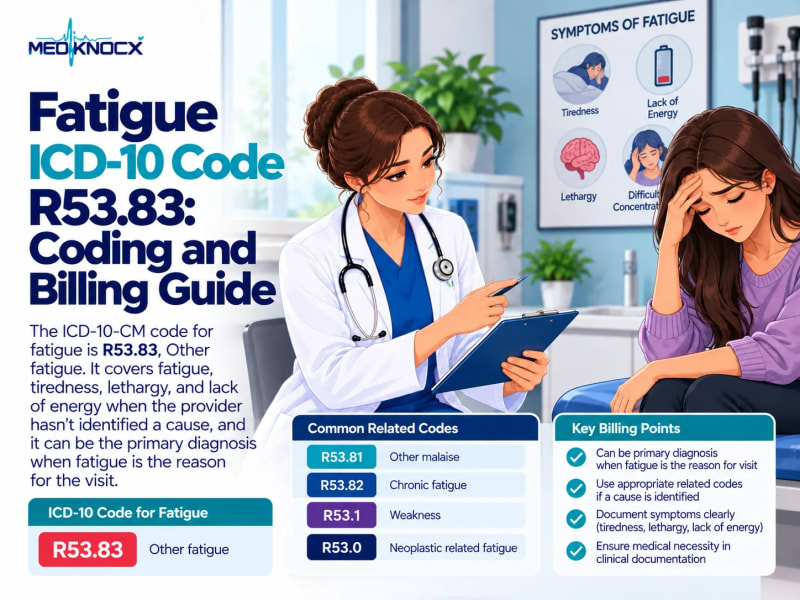
Fatigue ICD-10 Code R53.83: Coding and Billing Guide
R53.83 is the ICD-10 code for fatigue, tiredness, lethargy, and lack of energy. Learn R53.81 malaise, R53.82 c...

Oct 3, 2026
1 min read

Jordan Taylor
April 6, 2026
Table of Contents
14
In medical billing, claim denials can disrupt cash flow and create administrative burdens. One of the most common and preventable denial codes is CO-197, which indicates that a claim was denied due to missing preauthorization, precertification, or required notification from the payer.
For healthcare providers, understanding Denial Code CO-197 is essential to maintaining a strong revenue cycle management (RCM) process and avoiding unnecessary revenue loss.
Denial Code CO-197 is classified as a contractual obligation denial, meaning the payer refuses payment because required authorization was not obtained before the service was performed.
This denial is not typically related to medical necessity but rather to failure to follow payer administrative requirements.
Example:
If a provider performs an MRI without prior authorization, even if medically necessary, the claim may be denied under CO-197 — resulting in no reimbursement.
Preauthorization is a critical front-end RCM process where providers obtain approval from the patient’s insurance company before delivering certain services.
It helps:
Failure to obtain authorization can result in complete Denial Management Services, and in many cases, the cost cannot be transferred to the patient — directly impacting practice revenue.
Understanding the root causes of CO-197 denials helps prevent them effectively.
The service required approval, but it was not requested before the procedure.
Authorizations are time-sensitive. If services are performed outside the approved period, claims may be denied.
Authorization was obtained for one procedure, but a different service was performed.
Errors in CPT codes, patient data, or service details can lead to denial even if authorization exists.
Emergency services may be exempt from authorization, but improper documentation can still trigger a CO-197 denial.
CO-197 denials can significantly affect a practice’s financial performance:
Frequent CO-197 denials often indicate weaknesses in front-end processes such as scheduling, verification, and authorization tracking.
Preventing CO-197 denials requires a proactive and structured approach to front-end revenue cycle management.
Verify coverage and determine authorization requirements before the appointment.
Ensure all required elements — CPT codes, service dates, and documentation — are accurate before submission.
Use automated alerts to prevent services from being performed outside approved timeframes.
Front-desk, clinical, and billing teams must understand payer authorization requirements.
Regularly monitor changes in payer rules and communicate updates to staff.
If a claim is denied under CO-197, timely action can improve the chances of reimbursement.
Identify the exact reason for denial — missing, expired, or incorrect authorization.
Check if exceptions apply, such as emergency services or retroactive authorization policies.
Include:
Clearly explain why the claim should be reimbursed, referencing payer guidelines and supporting evidence.
Track the appeal status and maintain communication with the payer until resolution.
To minimize denial risks, healthcare practices should:
A patient undergoes an outpatient procedure that requires preauthorization. The front desk assumes approval is not needed and proceeds without verification.
The claim is submitted and denied under CO-197. Since no authorization was obtained, the provider cannot bill the patient, resulting in a complete revenue loss.
This highlights the importance of accurate front-end verification and authorization tracking.
Modern healthcare practices are adopting automation tools to improve authorization workflows. These tools help:
While technology improves efficiency, staff training remains essential to ensure accurate implementation.
Each payer has unique authorization rules. Building a centralized database of payer requirements can significantly reduce errors.
This database should include:
Keeping this information updated ensures consistency across teams and reduces denial risks.
Denial Code CO-197 is highly preventable with strong front-end revenue cycle processes, proper staff training, and up-to-date payer knowledge.
By focusing on:
healthcare providers can protect revenue, improve cash flow, and maintain compliance.
Partnering with an experienced revenue cycle management provider like Mediknocx further strengthens your ability to reduce denials, streamline operations, and ensure consistent reimbursements — allowing your team to focus on delivering quality patient care.
It indicates that a claim was denied because required preauthorization or notification was not obtained from the payer before the service was performed.
Yes, depending on the situation. Appeals may be successful if proper documentation, emergency justification, or retroactive authorization is provided.
Implement strong front-end processes, verify authorization requirements, train staff, and use automated tracking tools.
Explore more medical billing guides, coding updates, and revenue cycle tips.
R53.83 is the ICD-10 code for fatigue, tiredness, lethargy, and lack of energy. Learn R53.81 malaise, R53.82 c...
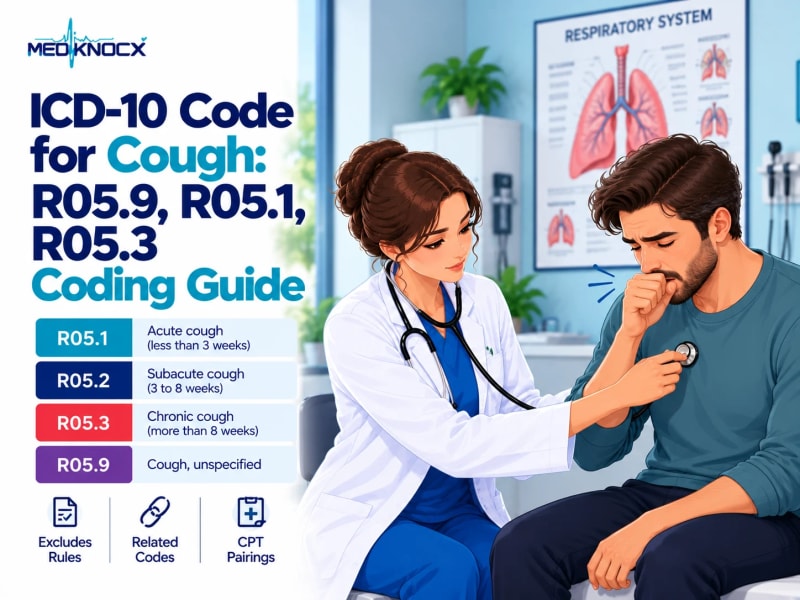
ICD-10 codes for cough by duration: R05.1 acute, R05.2 subacute, R05.3 chronic, R05.9 unspecified. Plus Exclud...
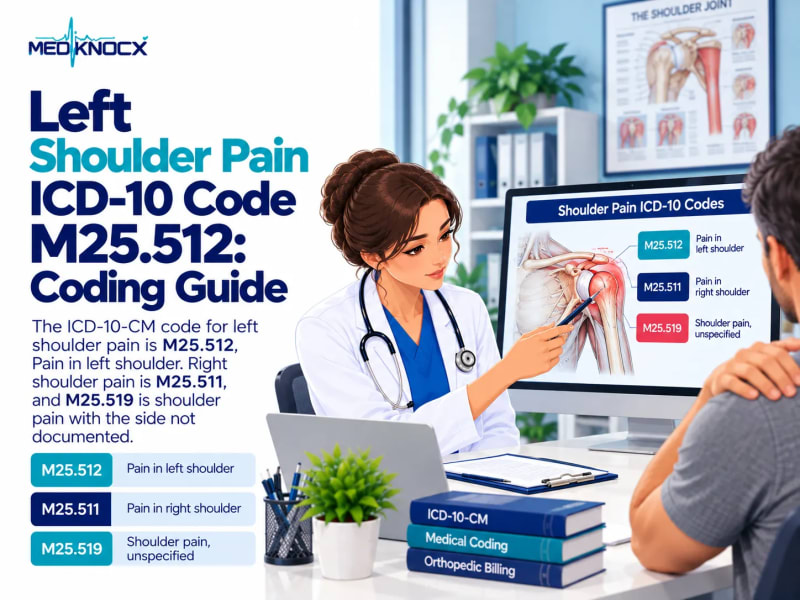
M25.512 is the ICD-10 code for left shoulder pain. See M25.511, M25.519, bilateral coding, scapula and clavicl...