Healthcare
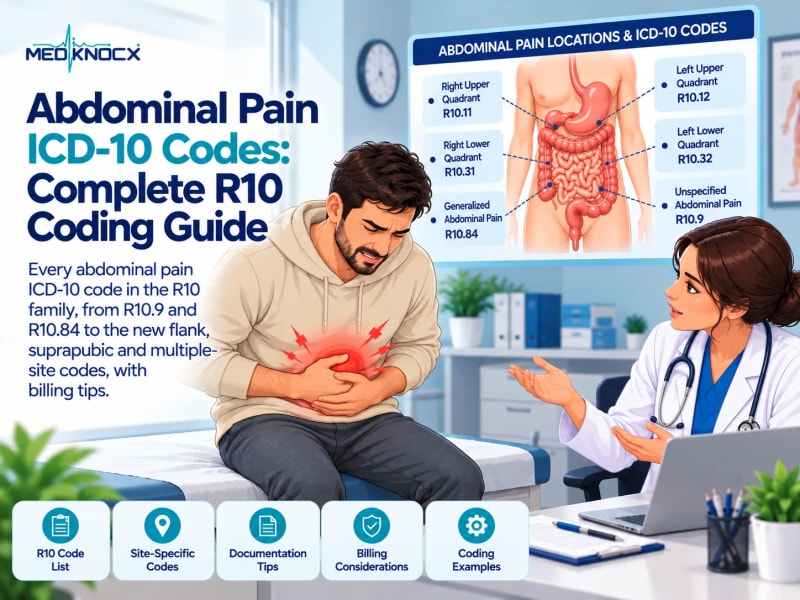
Abdominal Pain ICD-10 Codes: Complete R10 Coding Guide
Every abdominal pain ICD-10 code in the R10 family, from R10.9 and R10.84 to the new flank, suprapubic and mul...

Sep 26, 2026
1 min read

Jordan Taylor
May 6, 2026
Table of Contents
9Complete guide to 96127 CPT code: description, billing guidelines, reimbursement, modifiers, and documentation for behavioral screening.
Are you billing behavioral health screenings and leaving money on the table? The 96127 CPT code is one of the most underutilized codes in primary care billing. Studies show over 60% of eligible primary care practices never bill this code at all. This guide answers every question about the 96127 CPT code description, billing guidelines, and reimbursement. Start capturing the reimbursement your practice deserves today.
CPT 96127 represents brief behavioral or emotional assessments administered using validated screening tools. These screenings are essential for identifying mental health conditions early and supporting ongoing care management.
Typical use cases include:
These services are commonly performed in primary care, pediatrics, and behavioral health settings.
To report CPT 96127, the screening tool must be standardized and validated. Common examples include:
Each completed and scored tool equals one billable unit.
Reimbursement for 96127 is modest per unit but adds up quickly across a practice. Understanding payment rates helps you evaluate billing value.
Reimbursement for CPT 96127 ranges from $3 to $7 per unit under Medicare, though commercial payers may reimburse more depending on contracts and location.
Key factors affecting reimbursement:
Because reimbursement is relatively low, practices should focus on efficient workflows and accurate documentation.
Yes, 96127 is separately billable alongside office visit codes. It represents a distinct service beyond the standard evaluation and management visit. Most payers reimburse 96127 in addition to your E/M code. However, the screening must be clearly documented as a separate service.
Multiple units of 96127 are billable in a single visit. Each standardized instrument represents one unit. If you administer PHQ-9 for depression and GAD-7 for anxiety in the same visit, bill two units of 96127. Verify individual payer policies before billing more than two units.
A physician does not need to administer the screening personally. Clinical staff, including medical assistants and nurses, can administer instruments. The provider must review results, document clinical interpretation, and sign the note. Delegation to clinical staff makes 96127 highly efficient for practice workflow.
This is one of the most frequently asked questions about 96127 billing. The answer depends on your specific billing situation.
| Situation | Modifier Required | Which Modifier | Reason |
| Billed with E/M same visit | No modifier needed, usually | None required | Distinct service recognized by most payers |
| Two units billed same visit | No modifier needed | None | Each unit = separate instrument |
| Billed during a preventive visit | Modifier 25 sometimes | Modifier 25 on E/M code | To separate preventive from additional service |
| Billed with psychiatric codes | Modifier 59 may be needed | 59 on 96127 | Indicates a distinct service from psychiatric evaluation |
| Medicare billing | Check LCD policy | May vary | Some MACs have specific requirements |
| Medicaid billing | Varies by state | State-specific | Always verify state Medicaid guidelines |
Proper documentation protects your practice during audits. It also supports medical necessity for the screening service
The screening instrument name must be documented specifically. Record the score or result of the screening. Include your clinical interpretation of results. Document any follow-up actions taken based on the score. Note who administered the instrument and when. Results must be in the medical record before billing.
For a PHQ-9 screening, your note should state the instrument name, score, and clinical response. Example: “PHQ-9 administered by MA. Score 12, indicating moderate depression. Results reviewed with the patient. Referral placed to behavioral health.” This brief documentation fully supports 96127 billing.
| ICD-10 Code | Description | When to Use with 96127 |
| Z13.89 | Encounter for screening for other disorders | General behavioral health screening |
| Z13.30 | Screening for mental disorders, unspecified | Mental health screening visits |
| Z13.31 | Screening for depression | PHQ-9 or PHQ-2 administration |
| Z13.32 | Screening for maternal depression | Edinburgh Scale administration |
| F32.9 | Major depressive disorder, unspecified | Known depression, monitoring screen |
| F41.9 | Anxiety disorder, unspecified | GAD-7 administration for known anxiety |
| Z81.8 | Family history of other mental disorders | Risk-based screening indication |
Integrating 96127 into your practice workflow maximizes billing efficiency. Staff administers instruments during rooming before the provider enters. Results are available for the provider during the visit. Provider reviews scores and documents interpretation in the note. Create a standing order for specific screenings at specific visit types.
The 96127 CPT code covers brief emotional and behavioral assessments using standardized instruments. Each instrument administered equals one billable unit. Bill multiple units when multiple instruments are used in the same visit. Documentation must include the instrument name, score, and clinical interpretation. Modifier 25 goes on the E/M code, not on 96127, when billed together.
96127 covers a brief emotional and behavioral assessment with scoring and documentation per a standardized instrument.
96127 itself typically does not need a modifier. When billed with a preventive visit, add modifier 25 to the E/M code, not to 96127.
Medicare pays $5 to $10 per unit. Commercial insurers pay $15 to $25 per unit. Billing two units per eligible visit captures $30 to $50 in additional reimbursement per encounter.
Yes, 96127 is separately billable alongside E/M codes. It represents a distinct service. Document the screening separately from your office visit note to support separate billing.
You can bill one unit per standardized instrument administered. Two different screenings in one visit equals two units.
Explore more medical billing guides, coding updates, and revenue cycle tips.
Every abdominal pain ICD-10 code in the R10 family, from R10.9 and R10.84 to the new flank, suprapubic and mul...
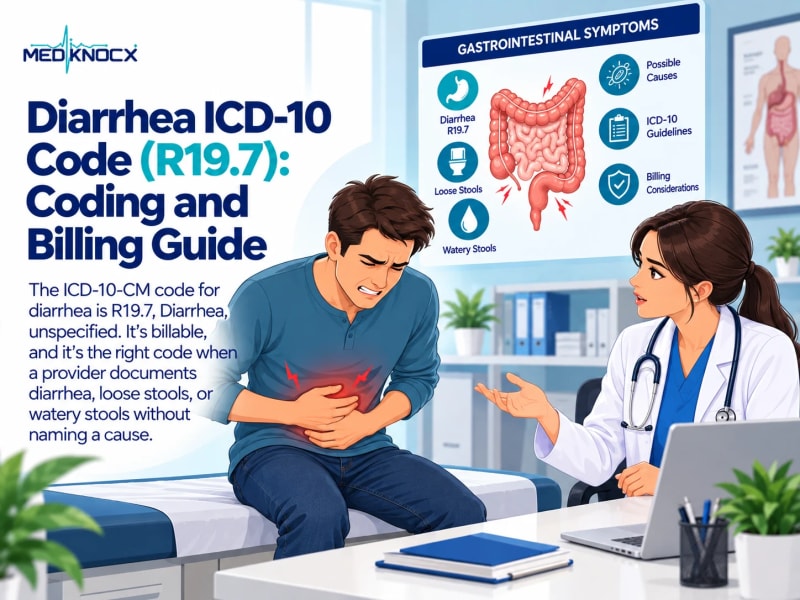
R19.7 is the ICD-10 code for diarrhea, unspecified. Learn when to use K52.9, A09, K58.0, K59.1, C. diff and tr...
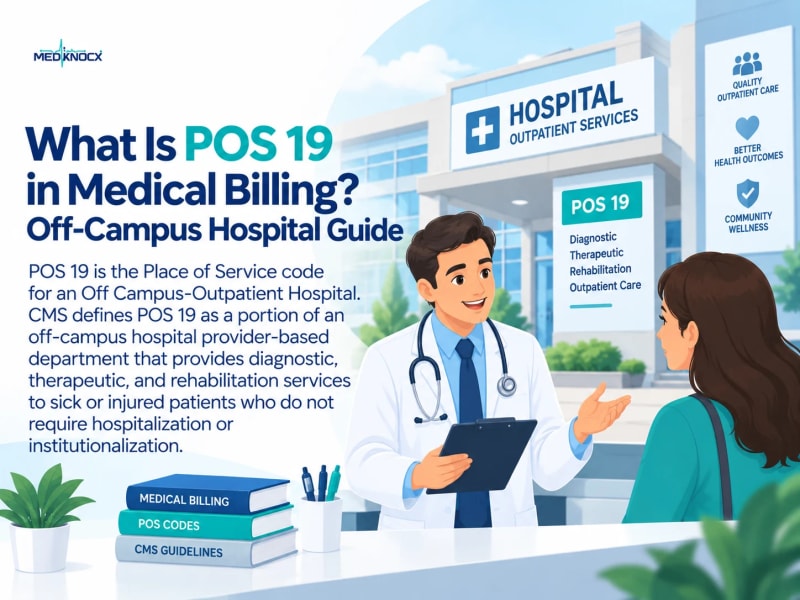
Learn what POS 19 means in medical billing, when to use it, POS 19 vs POS 11 and 22, Medicare billing, reimbur...